{
“title”: “The Overview Effect: Applying Space Psychology to High-Stakes Leadership”,
“meta_description”: “Discover how the cognitive shifts experienced by astronauts inform high-performance leadership, strategic perspective, and long-term decision-making.”,
“tags”: [“Space Exploration”, “Leadership Psychology”, “Cognitive Performance”, “Strategic Thinking”, “Operational Excellence”],
“categories”: [“Science”, “Business”],
“body”: “
The Cognitive Architectures of Deep Space
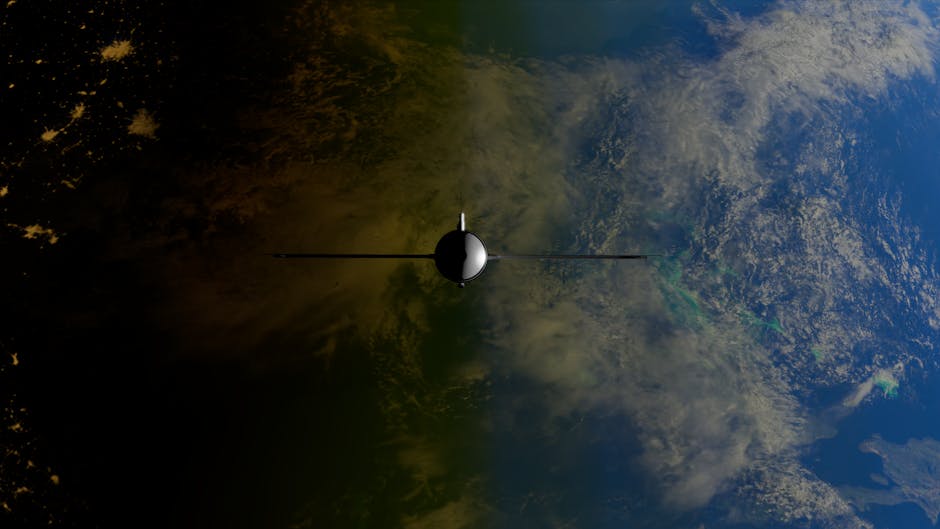
Astronauts frequently report a profound cognitive shift known as the Overview Effect—a transcendent awareness of Earth as a fragile, singular system. While this phenomenon is often framed as a spiritual epiphany, for the operator and the executive, it represents the ultimate state of strategic distance. Understanding how the isolation and scale of space exploration recalibrate the human psyche offers a blueprint for leaders who must maintain objectivity amidst the noise of high-stakes environments.
True leadership requires the ability to toggle between the granular details of execution and the macroscopic view of the market. In orbit, this is not a choice but a survival requirement. When every variable carries life-or-death weight, the cognitive load is extreme. Those who thrive in this environment do not manage stress; they restructure their mental models to account for systems-level interdependencies.
Reframing Operational Reality
Space-bound psychology emphasizes a shift from self-centric reaction to system-centric anticipation. In corporate operations, tunnel vision is a common failure state. Leaders often become so tethered to immediate output that they lose sight of the foundational trajectory of their strategy. The astronaut’s requirement to monitor life-support systems while simultaneously conducting complex experiments provides a clear parallel to the dual-track requirement of modern business: maintaining the core infrastructure while pursuing innovation.
High-performers who adopt an orbital perspective prioritize objective data over emotional reactivity. By viewing their organization as a closed-loop system, they identify inefficiencies that are invisible to those caught in the daily friction of the workforce. This distance is a tool for decision-making; it allows for the neutral assessment of failures without the paralyzing weight of proximity.
Decision-Making Under Extreme Constraints
The psychology of space exploration is essentially the psychology of risk mitigation. When resources are finite and supply lines are non-existent, the cost of an error compounds exponentially. This environment demands a move toward what engineers call ‘fault-tolerant’ systems. In an office setting, this translates to robust operations that function effectively even when specific components fail or communication channels degrade.
Leaders can look to the protocols of space agencies to refine their own internal logic. By implementing checklists and rigorous protocols that account for cognitive fatigue, they insulate their teams from the common traps of human bias. As explored in our broader discourse on performance, the goal is not to eliminate human error entirely, but to design systems where that error does not result in systemic collapse.
The Long-Term View
Exploration forces a radical extension of the planning horizon. Missions are measured in years, yet executed in seconds. This tension is the defining characteristic of elite venture building. Founders who align their daily actions with decade-long horizons mirror the psychological conditioning of mission commanders. It is a detachment from the ‘now’ that empowers better decisions for the ‘next’. For further insights into building sustainable professional structures, visit TheBossMind Network.
Further Reading
”
}






Leave a Reply